Tuesday, 23 May 2023

Understanding Cannabinoids: Effects, Differences, and the Top 5 Cannabinoids

Table of Contents

Cannabinoids are natural compounds found in the cannabis plant and they have gained significant attention due to their potential therapeutic benefits. While the cannabis plant contains over a hundred different cannabinoids, in this blog post, we will delve into the effects of cannabinoids, highlight the differences between various types of cannabinoids, and explore the top five cannabinoids that are widely studied and recognized.

Effects of Cannabinoids

Cannabinoids interact with the endocannabinoid system (ECS) in the human body, which plays a crucial role in regulating various physiological processes. The effects of cannabinoids can vary depending on the specific cannabinoid and its interaction with the ECS. Some common effects of cannabinoids include:

Pain Relief:

Cannabinoids such as THC (delta-9-tetrahydrocannabinol) and CBD (cannabidiol) have shown promise in providing pain relief, both by reducing inflammation and altering pain perception.

Anxiety and Stress Reduction:

Certain cannabinoids, particularly CBD, have been found to have anxiolytic properties, offering potential benefits in managing anxiety and stress-related disorders.

Anti-inflammatory Properties:

Cannabinoids exhibit anti-inflammatory effects, which can be beneficial in conditions like arthritis, multiple sclerosis, and inflammatory bowel disease.

Neuroprotective Effects:

Some cannabinoids have shown neuroprotective properties, indicating their potential in treating neurodegenerative diseases like Alzheimer’s and Parkinson’s.

Nausea and Appetite Stimulation:

Certain cannabinoids, notably THC, have been utilized to alleviate nausea and stimulate appetite in medical treatments such as chemotherapy.

Differences between Cannabinoids

While cannabinoids share some similarities, there are notable differences among them. Here are a few key distinctions:

  1. THC (delta-9-tetrahydrocannabinol) vs. CBD (cannabidiol): THC is the primary psychoactive compound in cannabis responsible for the “high” effect, whereas CBD is non-intoxicating and known for its potential therapeutic properties.

  2. Full Spectrum vs. Isolate: Full-spectrum CBD products contain a wide range of cannabinoids, including THC, whereas CBD isolate is a pure form of CBD with no other cannabinoids present.

  3. Endogenous vs. Exogenous: Endogenous cannabinoids, such as anandamide and 2-AG, are naturally produced within the human body, while exogenous cannabinoids are derived from external sources like the cannabis plant.

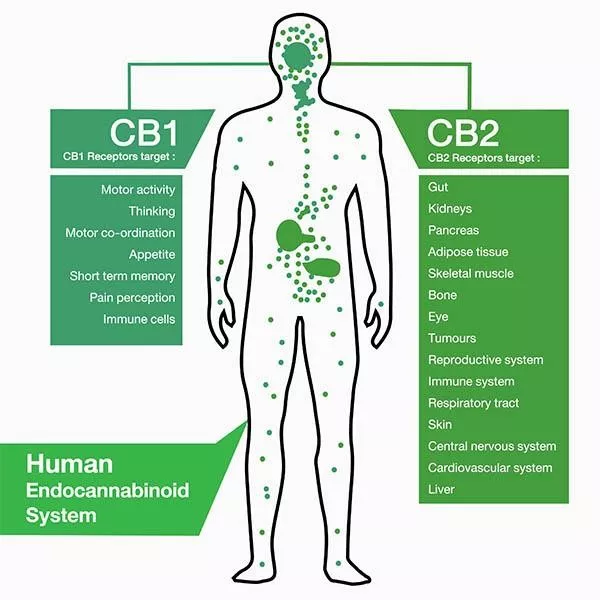
  4. CB1 vs. CB2 Receptors: Cannabinoids interact with different receptors in the ECS. CB1 receptors are predominantly found in the central nervous system, while CB2 receptors are primarily located in the peripheral organs and immune cells.

Cannabinoids (4)

Top 5 Cannabinoids

Here are the top five cannabinoids that have garnered significant attention in research and popular discussions:

  1. THC (delta-9-tetrahydrocannabinol): Known for its psychoactive effects, THC is also recognized for its therapeutic potential, including pain relief and antiemetic properties.

  2. CBD (cannabidiol): CBD has gained popularity for its potential anti-inflammatory, analgesic, and anxiolytic effects. It is widely used in various forms, including oils, topicals, and capsules.

  3. CBG (cannabigerol): CBG is a non-psychoactive cannabinoid that shows promise in reducing inflammation, inhibiting tumor growth, and providing neuroprotective effects.

  4. CBC (cannabichromene): CBC is believed to have anti-inflammatory, analgesic, and antidepressant properties. It also interacts with other cannabinoids to enhance their effects, known as the entourage effect.

  5. CBN (cannabinol): CBN is primarily known for its sedative properties and may help with sleep-related issues. It is often found in aged or degraded cannabis products.


Conclusion

Cannabinoids are a diverse group of compounds found in the cannabis plant, with each exhibiting unique effects and potential therapeutic benefits. Understanding the effects and differences between cannabinoids can assist individuals in making informed decisions regarding their usage. While THC and CBD remain the most well-known cannabinoids, CBG, CBC, and CBN are emerging as promising areas of research. As further studies are conducted, we can expect to uncover more about the potential benefits and applications of cannabinoids in the field of medicine and beyond.

Order bulk full spectrum CBD

The post Understanding Cannabinoids: Effects, Differences, and the Top 5 Cannabinoids appeared first on WeeDutch from WeeDutch.


source https://www.weedutch.eu/understanding-cannabinoids-effects-differences-and-the-top-5-cannabinoids/


Monday, 22 May 2023

The Life-Changing Impact of Full Spectrum CBD Oil

Table of Contents

Cannabidiol, more commonly known as CBD, has gained significant traction in recent years due to its potential therapeutic properties. Among the different types of CBD products, Full Spectrum CBD Oil has emerged as a popular choice. This comprehensive oil includes not just CBD, but also a variety of other beneficial cannabinoids, terpenes, and flavonoids found in the cannabis plant. These compounds work in synergy, amplifying each other’s effects in what is known as the “entourage effect.”

So how exactly does Full Spectrum CBD Oil impact people’s lives? Let’s explore.

  1. Natural Pain Management

One of the most acclaimed uses of Full Spectrum CBD Oil is in pain management. Whether it’s chronic pain resulting from conditions like arthritis and fibromyalgia or acute pain from injuries, many individuals report significant relief after using CBD oil. The compounds in Full Spectrum CBD Oil interact with the body’s endocannabinoid system, potentially reducing inflammation and modulating the perception of pain.

  1. Anxiety and Stress Relief

Modern life is replete with stressors, leading to a surge in mental health issues like anxiety and depression. Full Spectrum CBD Oil is increasingly recognized for its potential to alleviate these conditions. By interacting with serotonin receptors in the brain, CBD can help regulate mood and social behavior, offering a natural alternative to traditional pharmaceutical treatments.

  1. Improved Sleep Quality

Struggling with sleep is a common issue for many. Whether it’s difficulty falling asleep, staying asleep, or both, poor sleep can take a severe toll on overall health and well-being. Full Spectrum CBD Oil might offer a solution. Some research suggests that CBD can influence the sleep cycle, helping users achieve a deeper, more restful sleep without the grogginess often associated with sleep aids.

  1. Skin Health

Full Spectrum CBD Oil is not only beneficial when ingested but can also work wonders for skin health when applied topically. Its potential anti-inflammatory and antioxidant properties can help manage various skin conditions like acne, eczema, and psoriasis. Plus, the oil can help keep the skin nourished and hydrated, contributing to a healthier and more radiant complexion.

  1. Neuroprotective Properties

Emerging research is exploring the potential neuroprotective effects of Full Spectrum CBD Oil. Some studies suggest that it could play a role in managing neurological disorders like epilepsy and multiple sclerosis, although more research is required to fully understand these effects.

Full-Spectrum Distillate

Conclusion

Full Spectrum CBD Oil is rapidly becoming a go-to for many people seeking natural, holistic solutions for various health concerns. From managing pain and stress to improving sleep and skin health, this potent oil can positively impact lives in myriad ways.

While promising, it’s essential to remember that everyone’s experience with Full Spectrum CBD Oil can vary. Factors such as dosage, individual body chemistry, and the specific product used can influence the effects. Therefore, if you’re considering trying Full Spectrum CBD Oil, it’s best to consult with a healthcare professional to ensure it’s the right choice for your needs.

At WeeDutch, we are committed to providing safe, high-quality Full Spectrum CBD Oil and other cannabinoid products. We believe in the power of these products to enhance lives, and we’re excited to be part of your wellness journey.

(Note: Always consult a healthcare provider before starting any new health product or regimen. While Full Spectrum CBD Oil has been reported to have various benefits, it’s not intended to diagnose, treat, cure, or prevent any disease.)

Order bulk full spectrum CBD

The post The Life-Changing Impact of Full Spectrum CBD Oil appeared first on WeeDutch from WeeDutch.


source https://www.weedutch.eu/the-life-changing-impact-of-full-spectrum-cbd-oil/

Thursday, 4 May 2023

The Comprehensive Breakdown of CBDP: The Next-Gen Cannabinoid

Table of Contents

Introduction

Cannabidiphorol (CBDP) has been gaining attention within the scientific community and the general public alike for its potential therapeutic effects. As a recently discovered cannabinoid, CBDP is expanding the ever-growing list of compounds found in cannabis plants. In this blog, we will delve into the world of CBDP, explore its properties, potential benefits, and the future of cannabinoid research.

What is CBDP?

Cannabidiphorol, or CBDP, is a naturally occurring compound found in the Cannabis sativa plant. It is a member of the phytocannabinoid family, which includes over 100 known compounds such as cannabidiol (CBD) and delta-9-tetrahydrocannabinol (THC). CBDP was first identified in 2019 by a team of Italian scientists, who isolated and characterized the compound from a unique cannabis strain.

The Structure and Properties of CBDP

CBDP is chemically similar to its more well-known sibling, CBD, with the main difference being an extended side chain in CBDP’s molecular structure. This longer side chain may affect the interaction between CBDP and the human body’s endocannabinoid system (ECS), which is responsible for regulating various physiological processes.

Like CBD, CBDP is considered non-psychoactive, meaning it does not produce the “high” typically associated with THC. This property makes CBDP an attractive candidate for further research and potential therapeutic use.

The Endocannabinoid System and CBDP

The ECS is a complex cell-signaling system that plays a crucial role in regulating a variety of functions, including mood, appetite, sleep, immune response, and pain. The system is composed of three key components: endocannabinoids, receptors, and enzymes.

Endocannabinoids are naturally occurring compounds in the body that are similar in structure to cannabinoids found in cannabis plants. The two main receptors in the ECS are CB1 and CB2. CB1 receptors are primarily found in the brain and central nervous system, while CB2 receptors are more prevalent in the immune system and peripheral tissues. Enzymes within the ECS help to break down endocannabinoids once they have fulfilled their purpose.

Cannabinoids like CBDP can interact with the ECS by binding to or influencing the activity of these receptors. Preliminary research suggests that CBDP may have a greater affinity for the CB1 receptor compared to CBD, which could result in a more potent effect on the ECS.

Endocannabinoids

Potential Benefits of CBDP

Though research on CBDP is still in its infancy, early studies and anecdotal evidence point to several potential therapeutic benefits. Some of these potential benefits include:

  1. Pain Relief: Like CBD, CBDP may have analgesic properties, offering relief from various types of pain, including neuropathic and inflammatory pain.
  2. Anti-Inflammatory: CBDP could possess anti-inflammatory properties, which may help in the treatment of conditions like arthritis, inflammatory bowel disease, and autoimmune disorders.
  3. Neuroprotection: Early studies suggest that CBDP may have neuroprotective effects, potentially aiding in the treatment or prevention of neurodegenerative disorders like Alzheimer’s and Parkinson’s disease.
  4. Anticonvulsant: CBDP may have anticonvulsant properties, which could be beneficial for individuals suffering from epilepsy or other seizure disorders.
  5. Anxiety and Depression: Like CBD, CBDP may have anxiolytic and antidepressant properties, potentially helping to alleviate symptoms of anxiety and depression.

It is essential to note that these potential benefits are still under investigation, and more research is needed to fully understand the effects and mechanisms of CBDP in the human body.

The Future of CBDP Research

The discovery of CBDP and its potential therapeutic benefits has sparked interest in further cannabinoid research. Scientists are eager to investigate the compound’s properties, safety, and efficacy in treating various conditions. As research progresses, the following areas are likely to be explored:

  1. Preclinical Studies: Initial studies on CBDP have mainly focused on its chemical structure and basic properties. More preclinical studies are needed to examine CBDP’s potential benefits in animal models, as well as its safety and pharmacokinetics.
  2. Clinical Trials: Once preclinical studies have established a foundation for CBDP’s safety and potential efficacy, clinical trials can be conducted on human subjects. These trials will help determine the optimal dosing, administration methods, and possible side effects of CBDP.
  3. Drug Development: If clinical trials provide promising results, pharmaceutical companies may develop CBDP-based medications for specific conditions. This process will involve further research, regulatory approval, and eventual commercialization.
  4. Personalized Medicine: As the scientific community gains a deeper understanding of CBDP and other cannabinoids, personalized medicine approaches may emerge. This could involve tailoring cannabinoid-based treatments to an individual’s unique genetic makeup and endocannabinoid system.
  5. Synergistic Effects: Researchers are also interested in exploring the potential synergistic effects of CBDP in combination with other cannabinoids, terpenes, and flavonoids found in the cannabis plant. This concept, known as the “entourage effect,” posits that the therapeutic potential of cannabis compounds is maximized when used together.

Challenges and Considerations

While the future of CBDP research is undoubtedly exciting, several challenges and considerations must be acknowledged:

  1. Legal and Regulatory Hurdles: The legal status of cannabinoids varies globally, with some countries maintaining strict regulations on cannabis research. These legal barriers may impede the progress of CBDP research and development.
  2. Standardization: As CBDP gains popularity, ensuring the quality and consistency of CBDP-containing products will be crucial. Standardization methods must be developed and implemented to guarantee accurate dosing and consumer safety.
  3. Public Perception: As a relatively new cannabinoid, public awareness and understanding of CBDP are limited. Overcoming stigma and misconceptions surrounding cannabinoids will be essential for the acceptance and integration of CBDP-based treatments in mainstream medicine.

Conclusion

Cannabidiphorol (CBDP) represents a promising addition to the cannabinoid family. With its unique molecular structure and potential therapeutic benefits, CBDP has piqued the interest of researchers and the general public alike. As more studies are conducted, we may see CBDP emerge as a novel therapeutic agent for a variety of conditions. However, the journey to fully understanding and utilizing CBDP is still in its early stages, and overcoming various challenges will be crucial in unlocking its full potential.

Order CBDP

The post The Comprehensive Breakdown of CBDP: The Next-Gen Cannabinoid appeared first on WeeDutch from WeeDutch.


source https://www.weedutch.eu/the-comprehensive-breakdown-of-cbdp-the-next-gen-cannabinoid/

Understanding Cannabinoids: Effects, Differences, and the Top 5 Cannabinoids

Table of Contents Cannabinoids are natural compounds found in the cannabis plant and they have gained significant attenti...